
Tinder's Runna Partnership: Borrowed Credibility or Genuine Strategy?
- Tinder is hosting free 5K running events across London in June and July in partnership with running app Runna
- Match Group reported Tinder's average revenue per user declined 1% year-on-year in Q1 2024 despite price increases
- Bumble reported paying users down 4% quarter-on-quarter in its most recent filing
- 'Running' is currently trending as one of the most popular tagged interests on Tinder profiles in the UK
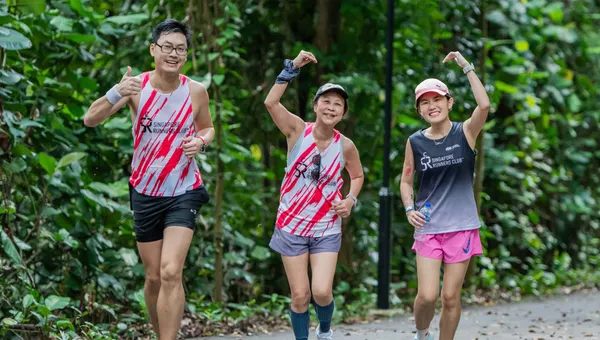
Tinder has announced a series of free 5K running events across London in June and July, hosted in partnership with running app Runna. The sessions will pair participants by fitness level for group runs, with the explicit aim of facilitating real-world connections between singles who've matched interest in running on the platform. The events represent the latest iteration of a growing trend across the dating industry: platforms repositioning themselves as offline community builders rather than purely digital matchmaking services.
From Swipes to Trainers
The partnership follows a familiar playbook Match Group (MTCH) has deployed across its portfolio over the past 18 months. Hinge ran its "Hinge Health" campaign featuring group workouts. The League hosted mixer events in major US metros. Even conservative players like eharmony have experimented with singles events tied to cultural moments.
This is brand activation dressed up as product strategy. Tinder isn't solving a user problem here—it's borrowing credibility from the run club phenomenon that's already happening organically across London.
What's changed is the underlying business case. These aren't feel-good community initiatives—they're response mechanisms to a retention crisis. Match Group disclosed in its Q1 2024 earnings that Tinder's average revenue per user declined 1% year-on-year despite price increases, suggesting member engagement remains under pressure.
Create a free account
Unlock unlimited access and get the weekly briefing delivered to your inbox.
Activity-based events offer a solution to multiple problems simultaneously. They generate PR coverage and social content. They provide justification for app usage beyond endless swiping. They create moments where the platform can claim to have "brought people together" without the awkward reality check of whether those people actually dated afterwards.
Renting Someone Else's Community
The timing is hardly coincidental. London's run club scene has exploded over the past two years, driven primarily by Instagram-friendly groups like Run Dem Crew, Midnight Runners, and dozens of neighbourhood-specific clubs. These aren't fitness sessions—they're social infrastructure for a generation that's abandoned traditional pubs and clubs as primary meeting venues.
Crucially, they work precisely because they're not optimised for dating. The commitment is to showing up and running, not to performing dateability. Friendships form. Some people date. Most don't, and that's fine.
Tinder's version flips this dynamic. Participants aren't joining a running community that happens to include singles—they're attending a dating event that happens to include running. The framing matters. One creates low-pressure social proximity; the other creates another form of evaluative performance, just with more lycra.
The partnership with Runna is telling in itself. Rather than build its own running community infrastructure—which would require sustained investment and genuine community management—Tinder is licensing credibility from an established fitness platform. It's the same logic behind Bumble's partnership with Soho House or Hinge's collaboration with various cultural institutions: borrow the aesthetic and audience of a successful community, host a one-off event, declare victory.
The Events-to-Engagement Question
What remains conspicuously absent from these announcements is any data on whether event attendees actually form meaningful connections, let alone relationships. Tinder claims that 'activity-based dates' are seeing growth in popularity, but this assertion lacks supporting evidence. Are these first dates suggested on the platform? Dates that happen after matching? The company hasn't disclosed.
Once you've established that the best thing about your dating platform is the events it hosts, you've effectively conceded that the product itself isn't delivering.
For operators, the metric that matters is whether event participants show increased app engagement and subscription conversion in the weeks following attendance. If these activations are simply expensive brand marketing with no measurable product impact, the strategy looks considerably less compelling—particularly as Match Group faces sustained pressure on operating margins.
The competitive context is equally relevant. Bumble has pushed further into real-world events with its Bumble Hive concept spaces. Hinge has positioned itself around "designed to be deleted," which implicitly suggests the app itself is a temporary tool. Grindr (GRND) has largely avoided this territory, banking on the fact that its core use case remains location-based hookups that already happen in physical spaces.
The risk for all of them is that they're training users to see the app as a promotional vehicle for offline experiences rather than a matchmaking service. Once you've established that the best thing about your dating platform is the events it hosts, you've effectively conceded that the product itself isn't delivering.
What Operators Should Watch
The Tinder-Runna collaboration will likely generate positive coverage and respectable turnout—free fitness sessions in London sell themselves. Whether it moves any business metrics that matter is another question entirely.
Dating platforms face a genuine strategic dilemma. User research consistently shows fatigue with swipe-based matching and appetite for more substantive real-world interaction. But the solution likely isn't dating apps hosting awkward branded events—it's building products that facilitate organic social overlap without the pressure of explicit romantic evaluation.
The run clubs that inspired this partnership work because they're not trying to be dating platforms. Tinder hosting running events doesn't solve its core product problem; it just highlights how far removed the experience has become from what users actually want.
- Watch whether event attendees show measurable increases in app engagement and subscription conversion—if not, these activations are expensive marketing with no product impact
- The strategic risk is training users to see dating apps as promotional vehicles for offline experiences rather than effective matchmaking services
- Successful run clubs work because they prioritise community over romantic outcomes—dating platforms hosting these events reverses that dynamic and may undermine the very appeal they're trying to capture
Comments
Join the discussion
Industry professionals share insights, challenge assumptions, and connect with peers. Sign in to add your voice.
Your comment is reviewed before publishing. No spam, no self-promotion.