

Bumble Is Killing the Swipe. Here Is What It Is Betting On Instead.
🕐 Last updated: March 16, 2026
- Bumble will trial the removal of swiping in select markets this year, replacing it with an AI assistant called Bee and narrative-based profile chapters rolling out globally by spring 2026
- Match Group reported declining paying subscribers for three consecutive quarters through Q3 2024, signalling industry-wide challenges with the swipe mechanic
- The global rollout is scheduled for spring 2026, giving Bumble 14 months to iterate based on trial data before full implementation
- Bumble has not disclosed how Bee will determine compatibility, what data inputs will train the model, or whether it will replace existing discovery algorithms entirely
Bumble's decision to trial the removal of swiping represents the dating industry's most aggressive retreat yet from the interface that defined a decade of product design and the unit economics of the entire sector. This isn't product evolution—it's an admission that the mechanism which made dating apps wildly profitable has so eroded user trust that the company's survival depends on abandoning it entirely. The move replaces the signature left-right mechanic with an AI assistant and narrative-based profiles, betting that reducing volume will improve match quality enough to justify the likely hit to session time.
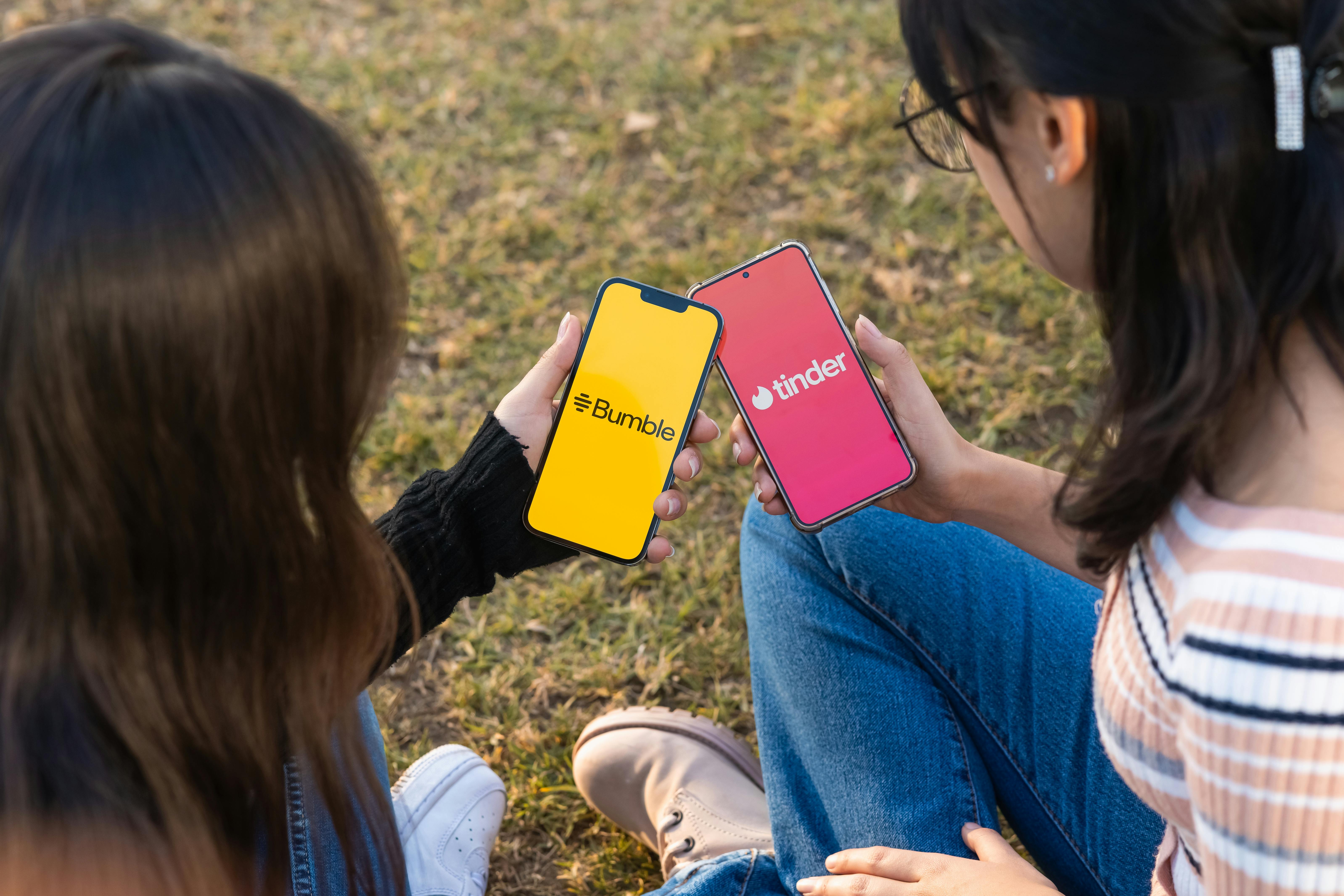
Bumble's pivot is commercially brave and operationally risky in equal measure. The swipe mechanic monetises beautifully—it's fast, addictive, and generates the engagement metrics that drive subscription upsells. Replacing it with AI-driven narrative matching is a bet that reducing volume will improve match quality enough to justify the likely hit to session time.
The signal here isn't that Bumble has solved dating app fatigue. It's that the company has concluded the old model is terminal, and moving first is less dangerous than moving last.
What Bumble is actually changing
According to the company, Bee will function as an AI concierge that 'learns your preferences' to surface compatible matches without requiring users to manually swipe through profiles. The system will replace static profile cards with story-driven chapters that allow members to present themselves through prompts and narratives rather than a grid of photos and a 150-character bio. Bumble claims the shift will enable 'chemistry and connection' to develop more naturally.
Create a free account
Unlock unlimited access and get the weekly briefing delivered to your inbox.
That's the company's theory, not established fact. There's no independent research showing that narrative-based profiles improve match quality or relationship outcomes compared to traditional formats. What's demonstrable is that younger users—particularly Gen Z—are abandoning swipe-based apps at accelerating rates, and Bumble's stagnant user growth reflects that exodus.
The trials removing swiping entirely will run in unspecified markets before the global rollout. Bumble has not disclosed how Bee will determine compatibility, what data inputs will train the model, or whether the AI will operate as a filter layer on top of existing discovery algorithms or replace them wholesale. Those details matter enormously for both user experience and trust and safety implications.

Why this is happening now
Bumble's core differentiator—women message first—stopped being a moat years ago. Competitors copied the feature. Worse, the broader swipe mechanic has become a liability across the industry. Match Group reported declining paying subscribers for three consecutive quarters through Q3 2024.
Apps positioning themselves as anti-swipe alternatives—Thursday, Feeld, Hinge's 'designed to be deleted' pivot—are capturing the users who've soured on gamified dating. Bumble's leadership is reading the same usage data every operator sees: session frequency is up, but conversion to meaningful conversations is down. Users swipe more and match less often with people they actually want to meet.
The dopamine loop that made Tinder a verb in 2014 now feels like a slot machine to the 24-year-old opening Bumble for the first time in 2025.
The company needs a new story to tell investors, and 'we're the app that doesn't make you swipe' is at least a story. Whether it's a credible one depends entirely on execution—and on whether Bumble can implement AI matchmaking without triggering the trust issues that plague every algorithmic system that claims to know what users want better than they do.
The data questions Bumble hasn't answered
Any AI assistant that 'learns your preferences' requires data collection at scale. Bumble hasn't clarified what behavioural signals Bee will track, how long compatibility profiles will be retained, or whether that data could be accessed by third parties. Those aren't academic concerns—dating apps already hold extraordinarily sensitive preference data.
An AI layer that explicitly builds match predictions on top of that creates new attack surfaces for bad actors and new liabilities for regulators looking at how platforms handle inferred characteristics around sexuality, religion, or ethnicity. Algorithmic matchmaking also risks replicating old biases in new packaging. If Bee learns preferences from historical swipe behaviour, it inherits whatever racial or socioeconomic skew already exists in that data.
Bumble hasn't published any fairness audits, bias testing protocols, or transparency reports for how Bee's recommendation engine will handle protected characteristics. Compliance teams at rival platforms will be watching that gap closely—not because they're sceptical of Bumble specifically, but because whatever regulatory scrutiny this product attracts will set precedent for the entire sector.
What operators should watch
If Bumble's trials show that removing swiping increases conversion to first dates without destroying session time, every growth team in the industry will be reverse-engineering the playbook by year-end. If engagement collapses and paying subscribers churn because users can't control their own discovery, it'll validate the opposite: that for all its flaws, swiping remains the least-bad interface for mate selection at scale.
The real test isn't whether narrative profiles feel more human than photo stacks. It's whether Bumble can train an AI to make better matches than users make for themselves—and do it without creeping users out or handing regulators a perfect case study in opaque algorithmic decision-making.
Bumble's competitors aren't sitting still. Match Group has AI features across its portfolio but hasn't abandoned core mechanics. Grindr leans heavily into its grid-based interface as a feature, not a bug. Feeld and Thursday grow by rejecting volume-based discovery entirely, curating small match pools manually.
If Bumble's bet pays off, it redefines what a dating app can be. If it doesn't, the company will have spent 18 months rebuilding its product around a mechanic that users reject—and handed market share to platforms that kept their heads down and fixed retention instead.
The spring 2026 global rollout is still 14 months out. That's enough time for Bumble to iterate based on trial data—or enough time for the board to decide this was a very expensive mistake. Either way, the industry will learn whether you can solve dating app fatigue by adding more technology, or whether the problem was always too much technology in the first place.
- Watch conversion metrics from Bumble's trials closely—if AI-driven matching increases first dates without destroying session time, expect industry-wide imitation by year-end
- Regulatory scrutiny of Bee's data collection and algorithmic bias will set precedent for how dating platforms handle AI-driven matchmaking across protected characteristics
- The success or failure of this pivot will determine whether dating app fatigue is solved by removing gamification or whether users fundamentally prefer manual control over algorithmic curation
Comments
Join the discussion
Industry professionals share insights, challenge assumptions, and connect with peers. Sign in to add your voice.
Your comment is reviewed before publishing. No spam, no self-promotion.