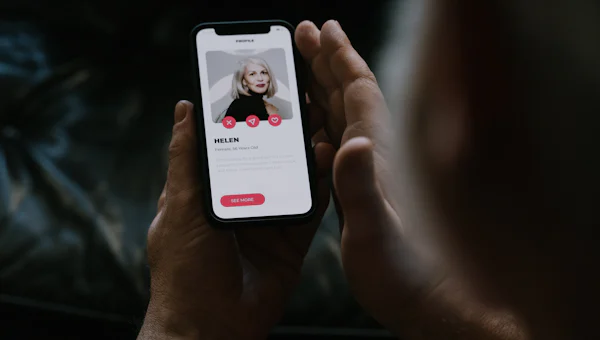

Hinge's £1M Bet: Real-World Events Over App Engagement
- Match Group is investing £1 million to fund Hinge users' real-world meetups in London pubs, cafés, and community centres
- The US version of the programme subsidised 3,500 events attended by 125,000 people, with 73% focused on friendship rather than romance
- Fewer than half of US event participants were actually Hinge users, meaning shareholder capital funds events where attendees may never open the app
- Hinge's parent company reported 11% revenue growth in its Evergreen & Emerging brands category last quarter but declined to share Hinge-specific engagement metrics
Match Group is spending £1 million to get Hinge users out of the app and into London pubs, cafés, and community centres. The fund, which launched in the US last year and subsidised 3,500 events attended by 125,000 people, is expanding to the UK capital for the first time—betting that the path to dating app loyalty runs through real-world connection rather than endless swiping. The expansion comes at a telling moment as the platform faces growing competition from interest-based connection apps and mounting evidence that Gen Z singles are exhausted by the very behaviour that drives dating app revenue: prolonged time-in-app.

Product Development Disguised as Corporate Responsibility
This isn't altruism—it's product development disguised as corporate social responsibility. Hinge has recognised what operators across the industry are quietly acknowledging: algorithmic matching alone doesn't solve for connection, and a generation drowning in matches but starved of meaning won't stick around. The question isn't whether offline events work for brand building (they do), but whether any dating platform can build a sustainable business model around actually getting users partnered off rather than keeping them scrolling.
Match Group has spent two decades perfecting engagement metrics that reward time-on-platform. Funding pub meet-ups is a peculiar reversal.
The fund operates as a grants programme. Community organisers, clubs, and individuals apply for subsidies between £50 and £500 to host events—anything from book clubs to pottery classes to walking groups. Hinge covers costs but doesn't require attendees to use the app or even know the sponsor.
Create a free account
Unlock unlimited access and get the weekly briefing delivered to your inbox.
Building Brand Equity in a Trust Crisis
According to the company, 73% of funded US events were friendship-focused rather than explicitly romantic, and fewer than half of participants were Hinge users. That last figure deserves attention. Match Group is deploying shareholder capital to fund social events where the majority of attendees may never open the app.
The business case relies entirely on brand perception—positioning Hinge as the platform that 'gets it', that understands connection isn't transactional, that cares about loneliness even when it doesn't convert to revenue. It's a marked shift from traditional dating app marketing, which has historically focused on success stories, feature announcements, and aspirational lifestyle branding. Subsidising a stranger's pub quiz night is a different proposition entirely.

The timing matters. Dating platforms are navigating intensified scrutiny over their mental health impacts, particularly among younger users. The UK Online Safety Act compliance deadline has concentrated minds across the sector on duty of care responsibilities. Funding community events that address social isolation—whether or not they generate matches—builds goodwill that may prove valuable when regulators ask harder questions about platform design choices.
When the Product Is the Problem
Hinge has long marketed itself as 'designed to be deleted', a tagline that positions planned obsolescence as virtue. The reality, reflected in Match Group's investor presentations, is more complex. The business model depends on a steady influx of new users replacing those who couple off, alongside a substantial base of long-term users who remain engaged despite not finding partners.
Research from the Office for National Statistics published last year found that 16-to-29-year-olds in the UK reported the highest rates of loneliness of any age group, with London specifically showing elevated levels compared to other regions. A separate study from the Co-op Foundation indicated that a quarter of young Londoners feel lonely often or always, citing high living costs, transient populations, and the collapse of 'third spaces' as contributing factors.
Dating apps emerged to solve a matching problem: helping people find compatible partners efficiently. They've proven remarkably good at generating first dates. What they haven't solved—what no algorithm has cracked—is converting swipes into sustained connection.
Hinge's events fund is a tacit acknowledgement of that limitation. If the app worked perfectly, there'd be no business case for subsidising in-person community building.
The Competitive Context Nobody's Discussing
Bumble launched Bumble For Friends in 2022, expanding beyond dating into platonic connection. Grindr has explored events partnerships. Even Match.com, the industry's legacy brand, has experimented with in-person mixers. The pattern suggests a sector-wide recognition that digital-only matching has hit diminishing returns.
What makes Hinge's approach distinct is the lack of a direct conversion mechanism. Attendees don't check in via the app. Event organisers don't share participant data. There's no post-event prompt to match with people you met. According to the company's own framing, this is brand building, not user acquisition.

That's either strategically sophisticated or financially questionable, depending on how Match Group's leadership explains it to shareholders. Brand equity matters, particularly in a market where user acquisition costs continue climbing and competitor differentiation increasingly relies on vibes rather than features. But £1 million is a meaningful sum to deploy with no direct attribution model and no requirement that beneficiaries ever become paying subscribers.
What Happens When You Solve the Problem
The fundamental tension here is structural. Dating apps optimise for engagement because engagement drives revenue through subscriptions and in-app purchases. Users who quickly find partners and leave represent success for the individual but churn for the platform. Hinge's fund explicitly aims to reduce loneliness and build community—outcomes that, if genuinely achieved, should reduce dependence on dating apps.
Match Group's bet appears to be that a generation exhausted by swipe fatigue will reward authenticity with loyalty. That Hinge wins by acknowledging the limits of its own product and investing in solutions that exist beyond the screen. It's a remarkably honest piece of positioning for an industry not known for candour about its business model tensions.
Whether it translates to subscriber growth, reduced churn, or better unit economics remains to be seen. What's already clear is that every major dating operator is wrestling with the same realisation: connection can't be fully commodified, and users increasingly know it. The platforms that survive the next five years will be those that figure out how to build businesses around that truth rather than in spite of it.
- Dating platforms are fundamentally rethinking their business models as they confront the tension between engagement-driven revenue and actually solving loneliness
- Watch whether this brand-building investment translates to measurable subscriber growth or reduced churn—if it doesn't, expect Match Group to demand clearer attribution mechanisms
- The UK Online Safety Act compliance deadline is driving dating apps to pre-emptively address duty of care concerns, making community investment a potential regulatory hedge as much as a marketing play
Comments
Join the discussion
Industry professionals share insights, challenge assumptions, and connect with peers. Sign in to add your voice.
Your comment is reviewed before publishing. No spam, no self-promotion.