
Facebook Dating's 'Top Player' Claim: Distribution Without Demand
- Facebook Dating has reached 'top player' status in the US without spending on traditional marketing, according to Meta's director of product Connor Hayes
- Match Group spent $212M on sales and marketing in Q4 2024 alone, while Bumble spent $73.6M in the same period
- Facebook Dating launched in 2019 and still doesn't monetise directly through subscriptions or in-app purchases
- Tinder reported 10.3 million average subscribers in Q1 2025, each paying an average of $17.24 per month
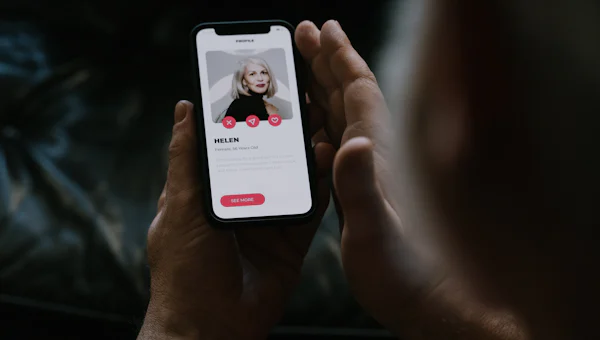
Meta has quietly built Facebook Dating into what it claims is a top player in the US dating market without spending a single dollar on marketing—a feat that either represents the most efficient user acquisition strategy in the industry or the most elaborate way to describe a product nobody remembers exists. Speaking at the IAB's Marketplace conference, Connor Hayes, Meta's director of product for the service, revealed growth driven entirely by in-app promotion across Meta's platforms. The disclosure marks one of the few public data points Meta has shared about a product it's treated less like a competitive offering and more like an internal experiment in feature-level distribution.
Hayes described the strategy as organic, relying on promotion within Meta's family of apps rather than the acquisition campaigns, brand building, or performance marketing that defines how Tinder, Bumble, and Hinge compete. Instead, Facebook Dating has functioned as a pilot case for what Hayes called 'promoting our products and features within our own apps'—a distribution advantage no dating operator can replicate. The company hasn't run acquisition campaigns or invested in building brand identity.
When distribution replaces demand generation
Meta's approach inverts the standard dating app playbook entirely. Match Group reported $212M in sales and marketing spend for Q4 2024 alone, much of it directed at Tinder and Hinge. Bumble disclosed $73.6M in the same quarter. These companies treat marketing as product strategy—not just to acquire users, but to build identity, communicate differentiation, and sustain brand heat in a market where app fatigue is endemic.
Create a free account
Unlock unlimited access and get the weekly briefing delivered to your inbox.
Facebook Dating skips that entirely. It relies on what amounts to house ads: prompts within Facebook and Instagram that surface the feature to existing users. The model works because Meta controls the largest distribution channel in consumer internet history. Two billion people use Facebook monthly, whilst Instagram reaches another two billion.
A conversion rate in the low single digits would generate tens of millions of users without a single outdoor board or influencer partnership. But distribution and engagement are not the same thing. Hayes offered no figures on daily active users, match rates, conversation volume, or retention—the metrics dating operators actually use to assess product health.
Meta's refusal to clarify whether 'top player' means downloads, active users, matches, or revenue—the metrics that actually matter—suggests distribution is doing a lot of work here.
He also didn't mention revenue, which is telling. Facebook Dating launched in 2019 and still doesn't monetise directly. Meta hasn't disclosed plans for a subscription tier, premium features, or in-app purchases, the business model that defines every scaled competitor.
What 'top player' actually means
Hayes's claim that Facebook Dating ranks as a top player in the US requires context Meta hasn't provided. Downloads are the easiest metric to inflate with zero-friction onboarding. Facebook Dating doesn't require a separate app—it's embedded in the main Facebook app, accessible with a single tap for anyone over 18 with a profile. That's not acquisition in the traditional sense; it's feature discovery.

Active usage tells a different story. Sensor Tower data from 2023 suggested Facebook Dating had not cracked the top ten dating apps by consumer spend in any major market. Apptopia figures from the same period showed lower session duration and repeat usage rates compared to Tinder, Bumble, and Hinge. If Facebook Dating were genuinely competitive on engagement, Meta would have disclosed it.
The company reports granular user metrics for WhatsApp, Instagram, and Messenger when they support the narrative. The comparison to established players is stark. Tinder reported 10.3 million average subscribers in Q1 2025, each paying an average of $17.24 per month. Bumble reported 4 million paying users across its platforms. Hinge, though Match Group doesn't break out subscriber numbers, is widely understood to drive significant revenue within the portfolio.
The cultural void
What Facebook Dating hasn't achieved is cultural presence. It's never trended, generated no memes, no viral success stories, no disaster date threads on Reddit. It doesn't appear in dating discourse the way Hinge's 'designed to be deleted' positioning or Bumble's women-first messaging does. That absence matters in dating more than in most categories.
People choose dating apps based on perception—of the user base, the intent level, the social signalling of being on the platform. Meta's no-marketing strategy creates a paradox. Without brand investment, Facebook Dating avoids the costs that weigh on Bumble's operating margins and force Match Group to defend Tinder's positioning every earnings call.
Without brand investment, Facebook Dating avoids the costs that burden competitors—but it also ensures the product remains invisible to the cultural conversation that drives preference and long-term retention.
But it also ensures the product remains invisible to the cultural conversation that drives preference and long-term retention. Users might try Facebook Dating because it's frictionless. Whether they stay, tell friends, or consider it their primary dating platform is harder to argue.
The structural advantage no competitor can match
The implications for competitors depend on what Meta does next. If Facebook Dating remains a feature indefinitely—free, unmonetised, and lightly maintained—it's a nuisance, not a threat. It siphons off casual users and early experimenters but doesn't challenge the core business of apps people pay for.
If Meta eventually layers in monetisation, leverages its data advantage to improve match quality, and starts treating Facebook Dating as a product rather than a pilot, the equation changes fast. For dating operators, the lesson isn't that marketing doesn't matter. It's that Meta plays a different game.
The company can afford to treat dating as an engagement lever within its ecosystem rather than a standalone P&L. That's a structural advantage no competitor can match—and a reminder that the dating market's biggest risk isn't another venture-backed app. It's the platform that already owns the social graph.
- Watch whether Meta moves to monetise Facebook Dating through subscriptions or premium features—this would signal a shift from experimental feature to serious competitive threat
- Distribution without cultural presence creates a ceiling: Facebook Dating may acquire users effortlessly but faces questions about engagement depth and retention that Meta has conspicuously avoided answering
- The real competitive moat isn't marketing spend—it's ecosystem control: Meta's ability to treat dating as an engagement lever rather than a standalone business gives it structural advantages traditional dating apps cannot replicate
Comments
Join the discussion
Industry professionals share insights, challenge assumptions, and connect with peers. Sign in to add your voice.
Your comment is reviewed before publishing. No spam, no self-promotion.