
Facebook Dating's 21M Users: A Distribution Triumph Over Brand
- Facebook Dating has reached 21 million daily active users, comparable to or exceeding Hinge's reported user base
- Meta has achieved this scale with almost no consumer marketing, relying entirely on distribution within the Facebook app used by 3 billion people
- Match Group generated $3.8 billion in revenue last year from dating, while Meta generated $164 billion primarily from advertising
- Facebook Dating doesn't appear to generate standalone revenue and Meta has not disclosed any monetisation strategy for the feature
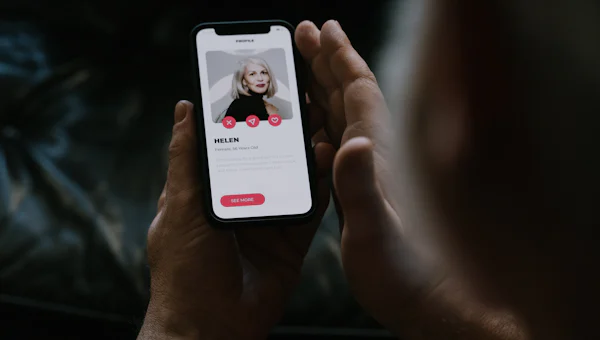
Facebook Dating just disclosed 21 million daily active users—a figure that puts Meta's unloved stepchild on par with the Tinders and Hinges that dominate App Store charts and cultural conversation. Yet almost nobody outside the industry knows it exists. Tom Alison, Meta's head of Facebook app, dropped the number during an earnings call this month, describing the feature as 'one of the most popular dating services' globally.
What's notable isn't just the scale. It's that Meta has reached it with almost no consumer marketing, no cultural positioning, and certainly none of the brand equity that Match Group has spent two decades building across its portfolio. Facebook Dating doesn't advertise. It doesn't sponsor podcasts. It exists as a tab inside an app that 3 billion people already use.

This is the clearest evidence yet that distribution beats brand in dating—at least at the top of the funnel.
Facebook Dating isn't winning because it's better or cooler or more intuitive than Hinge. It's winning because it's there, baked into the daily habits of billions. For Match Group, that should be sobering. The company has built an empire on brand differentiation and niche positioning, but if a feature with zero marketing can quietly amass 21 million daily users, the moat around dating apps may be narrower than Match Group's $8.5 billion market cap suggests.
Create a free account
Unlock unlimited access and get the weekly briefing delivered to your inbox.
The real question is whether Meta can or will monetise this—and whether it even needs to. Those 21 million daily users—assuming the metric is accurate and consistently measured—would make Facebook Dating larger by daily engagement than Hinge's reported user base of around 15 million, though the comparison wobbles on definitional grounds.
The social graph as unfair advantage
Facebook Dating's pitch is straightforward: it connects you with people who share friends, groups, or events. That social graph integration—what Alison described as 'leveraging the real social graph to help you connect with real people'—offers something dating apps can't replicate. When you match with someone, you can see mutual connections. You can filter by shared Facebook groups or events you've both attended.
Match Group has tried to build trust signals into its apps—Tinder's photo verification, Hinge's prompts designed to surface personality—but these are features bolted onto products designed for anonymity. Facebook Dating starts with the social graph and works backwards. That's a structural advantage, not a feature.

The irony is thick. Meta, a company synonymous with privacy scandals and data misuse since Cambridge Analytica, has built a dating product on the premise of transparency and real identity. Facebook Dating launched in 2019, barely a year after the privacy crisis that wiped $120 billion off Meta's market cap. The fact that it has grown to 21 million daily users suggests either that users have compartmentalised their trust concerns or that the value of social proof outweighs privacy anxiety in the context of dating.
Alison's framing—'real people' connecting via a 'real social graph'—leans hard into this. But it glosses over well-documented issues with bots, fake accounts, and impersonation across Facebook's broader platform. The social graph is only as trustworthy as its nodes, and Meta's enforcement record there remains patchy.
Revenue silence and strategic ambiguity
What Meta hasn't disclosed is whether Facebook Dating makes any money. The company doesn't break out dating revenue in earnings reports, and there's no public evidence of a subscription tier or in-app purchases comparable to Tinder Gold or Hinge X. If Facebook Dating is monetising at all, it's likely through in-feed ads or data collection that feeds Meta's broader advertising machine—neither of which would appear as a line item.
Facebook Dating doesn't need to be profitable. It doesn't even need to be a standalone business. It just needs to keep people inside Facebook's ecosystem for another few minutes a day, generating engagement data and ad inventory.
For Match Group, that's the nightmare scenario. The company competes on product, on brand, on user experience. Facebook competes on distribution and indifference to unit economics. If Meta decided tomorrow to offer Facebook Dating as a fully featured product with unlimited likes and no paywalls—funded entirely by its advertising engine—there's little Match Group could do to respond without torching its own business model.
The comparison to Hinge is particularly pointed. Match Group acquired Hinge in 2019 for a reported $400 million and has since positioned it as the 'designed to be deleted' antidote to swipe fatigue. Hinge grew average revenue per user by 21% year-on-year in Q4 2024, according to Match Group's earnings report, and now represents one of the company's strongest growth engines. But if Facebook Dating is already larger by daily users—and that's a meaningful 'if', given the metric ambiguity—then Hinge's cultural cachet and revenue intensity may not translate into the structural moat Match Group needs.
What happens when Meta pays attention
Facebook Dating has grown to 21 million daily users with what appears to be minimal internal investment. It's not prominently featured in Facebook's app. It doesn't get keynote time at Meta's developer conferences. It exists in the same strategic category as Facebook Marketplace or Groups—a feature that serves billions but doesn't define the company's narrative.
The risk for the dating industry is what happens if that changes. Meta has a history of cloning competitors, integrating them into its platforms, and letting distribution do the rest. Stories killed Snapchat's growth. Reels blunted TikTok's user acquisition. Facebook Dating could do the same to Hinge, Tinder, or Bumble if Meta chose to prioritise it.
Match Group's defence has been product differentiation and specialisation. The company operates a portfolio of apps designed for different demographics, relationship intentions, and cultural contexts. That portfolio strategy insulates it from single-product risk but doesn't protect it from a competitor that can bundle dating into an app with 3 billion users.
For now, Facebook Dating remains a feature, not a product. But features with 21 million daily users have a way of becoming priorities.
- Distribution within existing platforms can overcome the need for marketing spend and brand building in dating services, fundamentally challenging Match Group's portfolio strategy
- Meta's structural advantage lies in its social graph, which provides ambient verification that standalone apps cannot replicate without sacrificing anonymity
- Watch for whether Meta chooses to prioritise and monetise Facebook Dating—if it does, the competitive dynamics of the entire dating industry could shift rapidly
Comments
Join the discussion
Industry professionals share insights, challenge assumptions, and connect with peers. Sign in to add your voice.
Your comment is reviewed before publishing. No spam, no self-promotion.