
Feeld's Offline Bet: Retention Strategy or Digital Fatigue Hedge?
- Feeld reported 107% user growth between 2022 and 2023, expanding beyond its niche origins
- The platform has been publishing a print magazine since 2023 and hosting members-only events in New York, London, and Berlin
- Match Group reported Tinder payers down 9% year-over-year in Q4 2024, signalling industry-wide engagement challenges
- Research from the Kinsey Institute found roughly one in five Americans have engaged in consensual non-monogamy
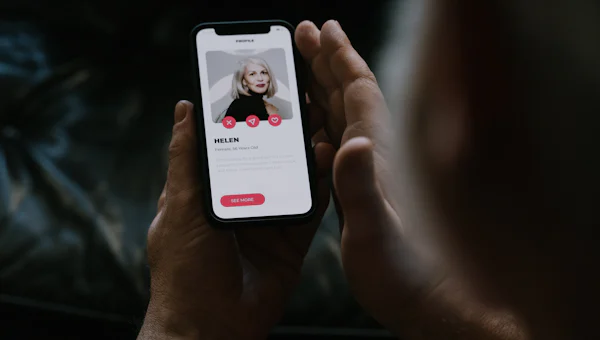
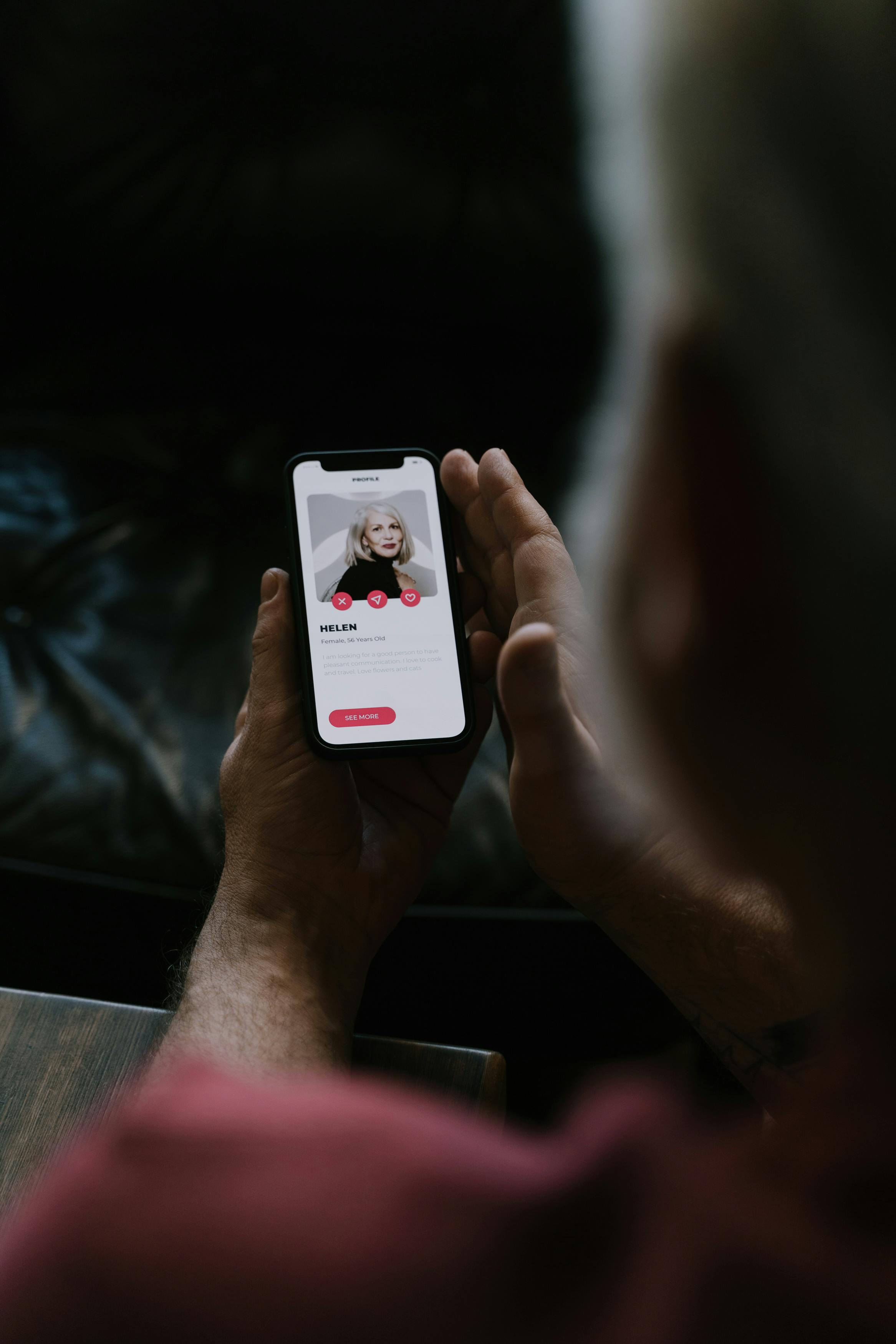
Feeld, the London-based dating platform for open-minded relationships, is making an unusual bet: keeping users engaged by getting them off the app. Whilst competitors like Match Group and Bumble struggle with declining engagement metrics, Feeld has launched a print magazine and expanded members-only events across major cities. For a company experiencing triple-digit growth, the strategy signals something more calculated than brand experimentation—it's an admission that digital-only retention has natural limits.
This isn't feature development. It's an admission that the infinite scroll model has natural limits, particularly for communities built around vulnerability and exploration rather than volume dating. Feeld has stumbled onto something worth watching: the idea that retention in 2025 might require offramping users into real-world touchpoints before they churn out of frustration.
Whether mainstream operators can replicate this without the tight community cohesion Feeld enjoys is another question entirely. Most won't try. They should.
Create a free account
Unlock unlimited access and get the weekly briefing delivered to your inbox.
Growth that carries risk
Feeld's user base expansion is real, but the growth trajectory introduces a core tension. The platform evolved from 3nder, a 2014-era app explicitly focused on facilitating threesomes, into a broader destination for polyamory, open relationships, and alternative arrangements. That repositioning worked: according to data the company has disclosed previously, membership surged as cultural acceptance of non-monogamy widened, particularly among younger cohorts.
But rapid scaling risks diluting the niche community dynamics that made the platform attractive in the first place. When a space for sexual minorities and relationship explorers grows by 107% in a single year, maintaining cultural coherence becomes harder. The singles looking for casual variety aren't necessarily aligned with established polyamorous networks.
Feeld's challenge mirrors what Grindr faced as it expanded beyond its core gay user base: growth is valuable, but community erosion kills retention.
Events and print serve as cultural guardrails. They signal who Feeld is for, and—crucially—who it isn't. The magazine isn't a lifestyle accessory. It's a filtering mechanism dressed up as content.
Why offline suddenly matters
Dating app fatigue isn't speculative. It shows up in earnings calls, user surveys, and session duration data across the industry. Match Group's Q4 2024 results showed Tinder payers down 9% year-over-year. Bumble disclosed in its Q3 2024 earnings that it was experimenting with 'IRL experiences' to boost engagement.

The market is searching for antidotes to the paradox of choice and the commodification of intimacy that infinite swipe queues produce. Feeld's approach is distinct because its offline programming isn't acquisition-focused. These aren't speed-dating nights designed to funnel new downloads.
They're retention plays for existing members, designed to deepen platform attachment by offering something competitors can't: physical proximity to a self-selecting community. The company hasn't disclosed attendance figures or event frequency, but the expansion into multiple cities and planned feature updates suggests these aren't one-off experiments.
The economics are different, too. Events require venue costs, staffing, and liability management. Print has production and distribution expenses that don't scale like pixels. But both create switching costs that pure digital products struggle to replicate. If a user has attended three Feeld events and keeps the magazine on their coffee table, the psychological exit friction is higher than it would be for an app they've only ever interacted with via notifications.
What mainstream operators won't copy
The challenge for Match's portfolio brands or Bumble is structural. Feeld's community has shared identity markers: openness to non-traditional relationship structures, comfort with sexual explicitness, often progressive politics. That cohesion makes in-person gatherings feasible and safe. Try hosting a generic 'Tinder meetup' in London and the variance in user expectations—from hookups to long-term partnership seekers to tourists killing time—becomes unmanageable.
Bumble's past IRL efforts leaned heavily on aesthetics and Instagram moments rather than genuine community formation.
The company's pivot toward 'opening moves' and AI-powered conversation starters shows where its product focus remains: optimising the digital funnel, not creating escape hatches from it. Grindr has more structural overlap with Feeld. Its user base shares identity-based community bonds, and the app already serves as social infrastructure beyond dating in many cities.
The company's Grindr for Equality initiative and event sponsorships hint at offline potential, but monetising that without alienating users remains untested. Grindr's ARPU was $27.39 in Q4 2024, according to its earnings release. Events and print are expensive to execute relative to subscription upsells.
What happens when the niche goes mass
Feeld's 107% growth figure aligns with broader cultural shifts. Research from the Kinsey Institute published in 2023 found that roughly one in five Americans have engaged in consensual non-monogamy at some point. Younger demographics report even higher rates of interest. The market Feeld serves is expanding, which makes its current growth less about competitive displacement and more about category creation.
But mainstreaming carries existential risk for niche platforms. As Feeld becomes less of a secret and more of a known quantity, its early adopters may seek new spaces that feel less exposed. The platform's offline strategy could serve as insurance against this: even if the app's cultural cachet fades, a robust events programme and editorial voice could sustain loyalty among core users.
The company hasn't disclosed revenue figures, funding status, or profitability metrics publicly. Without that transparency, evaluating whether its offline investments are sustainable or simply brand-building funded by venture capital remains difficult. If Feeld is burning cash to host events and print magazines exploring modern sexuality while acquisition costs rise, the strategy starts to look more defensive than innovative.
The broader industry will be watching whether Feeld's model generates measurable retention uplift. If members who attend events or engage with print convert to longer-tenured subscribers at meaningfully higher rates, expect other community-oriented platforms to follow. If the economics don't work, this becomes a case study in expensive brand differentiation that didn't translate to unit economics. Either way, the willingness to create safer, more inclusive environments outside mobile-first orthodoxy is the most interesting development in dating product strategy since Match started testing video profiles in 2019.
- Retention in 2025 may require offline touchpoints that create psychological switching costs beyond digital engagement alone
- Community-based platforms with shared identity markers have structural advantages in executing IRL strategies that volume-focused apps cannot easily replicate
- Watch whether Feeld's event attendees and print readers show measurably higher lifetime value—if proven, expect category-wide imitation from platforms with cohesive user bases
Comments
Join the discussion
Industry professionals share insights, challenge assumptions, and connect with peers. Sign in to add your voice.
Your comment is reviewed before publishing. No spam, no self-promotion.